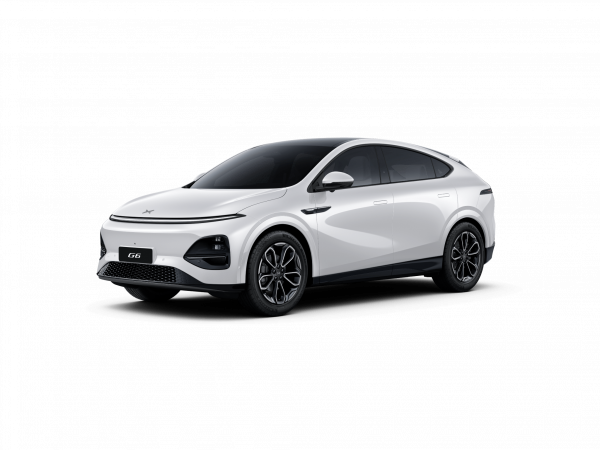
The XPENG G6 answers current EV needs with measurable gains in charging, range, efficiency, space, and cabin technology. The 2026 Australian-spec RWD Long Range uses an 80.8 kWh LFP battery, reaches 525 km WLTP, and supports up to 451 kW DC charging, taking the battery from 10% to 80% in about 12 minutes under suitable conditions. Energy use is rated at 17.9 kWh/100 km. A 2,890 mm wheelbase, 571-litre boot, 1,374 litres with the rear seats folded, and a 15.6-inch centre screen make the G6 suitable for commuting, family use, and long motorway trips.
EV ownership now depends on more than maximum range. Drivers also look at how quickly the battery recovers energy, how much electricity the car uses per 100 km, whether adults fit comfortably in the rear, and whether luggage space remains useful with five people on board. In 2026, the G6 addresses all four areas without relying on an unusually large battery.
Charging is one of the clearest examples. The RWD Long Range can accept up to 451 kW DC, while its 80.8 kWh LFP pack can move from 10% to 80% in around 12 minutes when battery temperature, charger output, and other conditions are suitable. That 70% battery increase is much shorter than the 30-minute charging stops still associated with many earlier-generation EVs.
The charging figure should not be read as a promise that every public charger will provide 451 kW. A 150 kW station cannot supply more than its own rated output, and charging power normally changes as battery state of charge rises. XPENG states that its full-domain 800V architecture and 5C battery support the higher peak rate, so suitable high-power infrastructure matters.
A 12-minute 10%–80% specification describes the car under suitable high-power charging conditions; it does not turn every public charger into a 451 kW charger.
The electrical system also improves how the G6 fits motorway travel. The Australian RWD Long Range is rated at 525 km WLTP on 20-inch wheels, while its official consumption figure is 17.9 kWh/100 km. The vehicle therefore combines a relatively moderate 80.8 kWh gross battery with a range above 500 km rather than relying on a pack well above 100 kWh.
WLTP remains a laboratory-based comparison standard rather than a guarantee of road range. Speed, temperature, passenger count, cargo, climate control, terrain, tyre pressure, and wheel choice can alter consumption. XPENG itself lists several of those variables in its range disclaimer, an important detail when comparing a 2026 EV with another model carrying a similar published figure.
Battery chemistry adds another practical difference. The latest G6 range uses lithium iron phosphate rather than the previous battery arrangement. XPENG introduced 68.5 kWh LFP capacity for Standard Range versions and 80.8 kWh for Long Range and Performance versions during the 2025 model update, while peak charging rose as high as 451 kW.
LFP chemistry avoids nickel and cobalt in the cathode and is widely used where thermal stability and long cycle life matter. Energy density can be lower than some nickel-rich chemistries, so vehicle efficiency and packaging become more important. In the G6, the 0.248 Cd drag coefficient and 17.9 kWh/100 km Long Range rating help compensate without pushing battery capacity beyond 80.8 kWh.
For someone comparing an elctric suv, body size matters almost as much as battery size. The G6 measures 4,758 mm long, 1,920 mm wide, and about 1,650 mm high, while its 2,890 mm wheelbase places a large share of the vehicle length between the axles. Five seats are standard, and the turning radius is listed at 5.8 metres.
Boot volume starts at 571 litres and rises to 1,374 litres when the rear seats are folded. That is a 803-litre increase, or roughly 141% more cargo volume, when maximum passenger capacity is not required. The figures are useful for buyers carrying suitcases, sports equipment, pushchairs, work bags, or flat-packed household items rather than judging practicality from exterior dimensions alone.
| Specification | RWD Long Range |
|---|---|
| Battery | 80.8 kWh LFP |
| WLTP range | 525 km |
| DC peak charging | 451 kW |
| DC 10%–80% | 12 min |
| Energy use | 17.9 kWh/100 km |
| Power | 218 kW |
| Torque | 440 Nm |
| 0–100 km/h | 6.7 sec |
| Boot | 571–1,374 L |
Those figures also show why the Long Range version does not need sports-car acceleration to work well as a daily SUV. Its rear motor produces 218 kW and 440 Nm, with 0–100 km/h taking 6.7 seconds. Buyers wanting more performance can choose the AWD model, which produces 358 kW and reaches 100 km/h in about 4.1 seconds.
Chassis hardware is more substantial than the touchscreen-heavy cabin might suggest. The G6 uses a front double-wishbone suspension layout and ventilated disc brakes at both ends. Its RWD Long Range kerb weight is listed at 2,115 kg, gross vehicle mass at 2,590 kg, and payload at 475 kg, numbers worth checking when several adults and luggage will regularly travel together.
Inside, the G6 uses a 10.25-inch digital instrument display alongside a 15.6-inch central touchscreen. Apple CarPlay and Android Auto are supported, while Bluetooth phone access, NFC card access, voice control, navigation, app functions, and OTA software updates reduce the number of everyday functions tied to a physical dealership visit. In 2026, software maintenance has become part of normal EV ownership.
Comfort equipment is also relevant on a car capable of more than 500 km under the WLTP procedure. XPENG lists electrically adjustable front seats with heating and ventilation, while selected configurations add massage functions. Rear-seat heating, a panoramic roof, and adjustable seating provide features that matter more on two- or three-hour trips than during a ten-minute showroom inspection.
Long-distance comfort depends on seat position, temperature control, noise, rear space, and charging breaks together; screen size alone says little about how pleasant a 400 km trip will feel.
Energy management extends beyond propulsion. XPENG equips the G6 with XHP 3.0 thermal management, while the 800V silicon-carbide electrical platform manages high-voltage operation. Battery and cabin temperature control matter because cold or very hot conditions can change charging power and consumption. Even a 10% efficiency difference would alter energy use noticeably across 20,000 km of annual travel.
For example, at the official 17.9 kWh/100 km figure, 20,000 km corresponds to about 3,580 kWh before charging losses are considered. At 20.0 kWh/100 km, the same distance would require about 4,000 kWh, a difference of roughly 11.7%. Electricity tariffs vary by home, provider, time of day, and public charging network, so consumption should be compared separately from local electricity prices.
Home charging remains slower than the headline DC figure. The RWD Long Range supports 11 kW AC charging, with XPENG listing about 9.2 hours for a 5%–100% charge. That fits overnight charging for owners with suitable home equipment, while the 451 kW DC capability is mainly relevant to compatible motorway or commercial fast-charging locations.
The G6 can also provide up to 6 kW through vehicle-to-load functionality in the Australian specification. V2L allows the traction battery to supply compatible external electrical equipment, which can be useful for camping, outdoor work, or appliances away from a normal power outlet. A battery at 50% state of charge still contains a substantial amount of stored energy compared with a portable consumer power pack.
Assistance systems cover both driving and parking. Listed equipment includes adaptive cruise control, lane centring, automatic lane-change assistance, forward-collision warning, automatic emergency braking, blind-spot detection, rear cross-traffic alert, driver-state monitoring, surround-view cameras, and automated parking functions. XPENG states that XPILOT ASSIST remains a driver-assistance system rather than autonomous driving.
That distinction matters in a 2026 vehicle because more sensors do not remove responsibility from the person behind the wheel. Weather, road markings, visibility, construction zones, wet surfaces, and unusual traffic situations can limit assistance performance. XPENG specifically tells drivers to remain aware of road conditions and intervene when the system does not provide appropriate steering, distance, or speed assistance.
Safety hardware is not limited to software. Australian specifications list seven airbags, rear ISOFIX mounting points, tyre-pressure monitoring, automatic emergency calling, seat-belt reminders, and an acoustic vehicle alert system. The same vehicle combines those features with a 475 kg payload rating, allowing safety, passenger capacity, and luggage requirements to be assessed from published numbers rather than equipment names alone.
Ownership suitability therefore depends on the driver's routine. A household travelling 40 km per weekday covers about 200 km before weekend use, well below the 525 km WLTP rating on paper. A motorway user covering several hundred kilometres at once will care more about the 12-minute 10%–80% charging claim, charger availability, temperature, and real motorway consumption.
Someone carrying family members will pay more attention to the 2,890 mm wheelbase, five-seat layout, 571-litre boot, 475 kg payload, and rear-seat comfort. A home-charging owner may care more about 11 kW AC support and 9.2-hour 5%–100% charging than the 451 kW public-charging peak.
The G6 meets modern EV use through the combination of 525 km WLTP range, 12-minute 10%–80% charging, 17.9 kWh/100 km rated consumption, 571 litres of luggage space, and an 80.8 kWh LFP battery. None of those figures should be considered alone; together they describe how the vehicle handles commuting, motorway travel, family use, home charging, and high-power public charging in 2026.